
Analysis
The Gummies Matched. The Jar Did Not. Margin Fell from 40% to 8%.
A Kazakhstan distributor approved the candy and its jar. The commercial shipment used a different container, forcing a markdown that cut margin and ended the reorder.
In this article
The gummy candy reached Kazakhstan with the same taste, shape and product quality the buyer had approved. The jar was different. That one substitution forced the shipment to be discounted, reduced an expected margin of roughly 35-40% to about 7-8%, and ended the possibility of a repeat order.
The case began early in 1404 on the Iranian calendar (2025-26). A food distributor in Kazakhstan ordered one truckload through a local trading partner. The commercial logic looked attractive: begin with a sample, secure approval, prepare the main shipment and build a repeat account if the first delivery performed well.
The approved sample contained more than candy
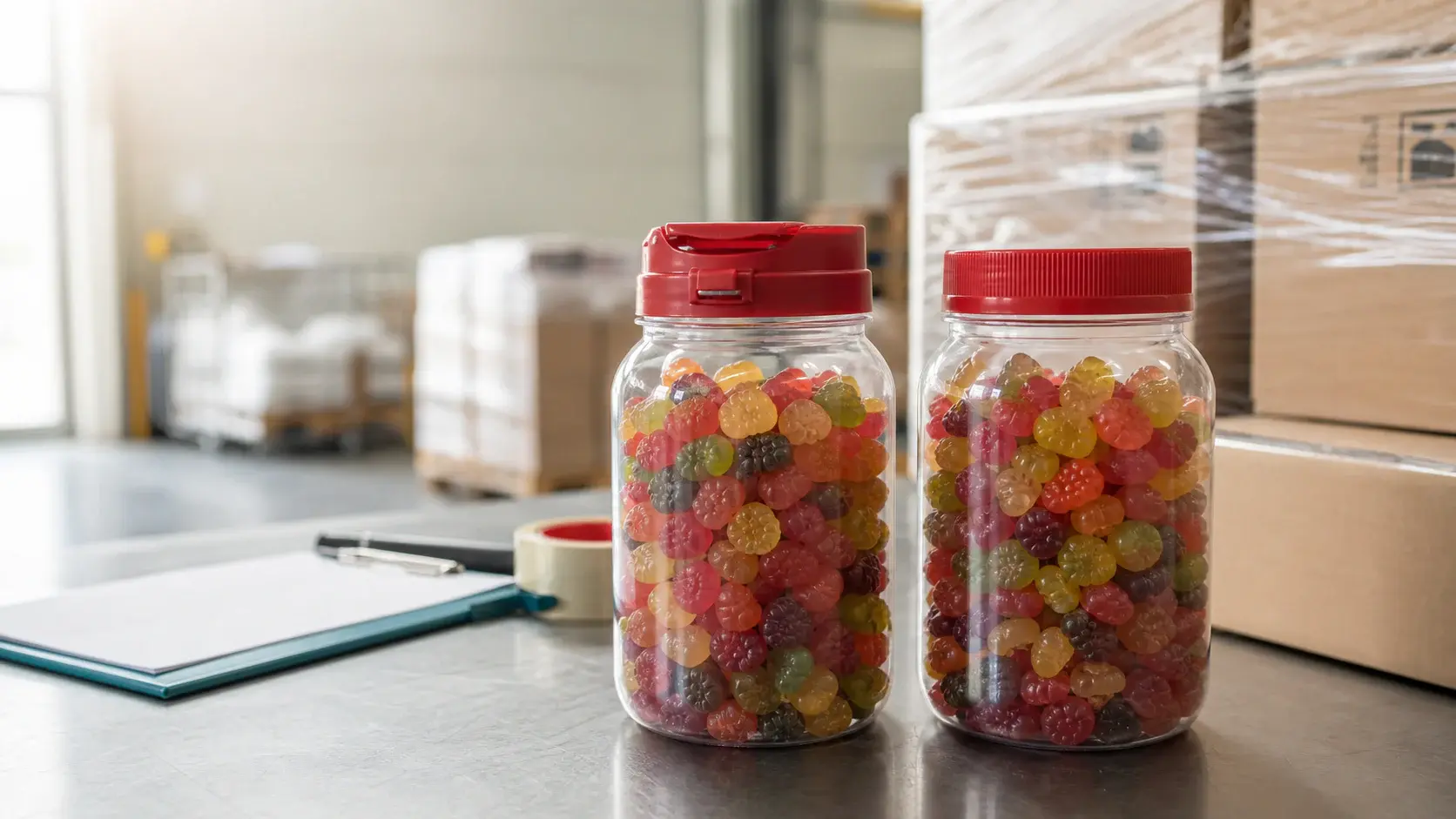
Russian and Turkish products were important references in the category. To present the offer well, several retail jars were sourced from Turkey. Iranian gummy candy from a reputable producer was placed inside one of those jars and sent to the buyer. The buyer approved the flavour, shape and container as one retail proposition.
The sample did its job in one sense: it made the product tangible. But it had not passed a second test. Nobody had yet established whether every visible component of that sample could be reproduced in Iran, at commercial volume, within the required lead time and at a cost the order could carry.
The packaging problem appeared after approval
The approved jar was not a standard Iranian-market format. Its lid remained attached to the body instead of separating completely. Producing that design specifically for the order was not economical at the required volume, and a like-for-like local source could not be secured in time.
At that point there were two clean options. The supplier could disclose the difference, send a replacement package and ask the buyer to approve it again. Or it could use an available local jar on the assumption that the candy itself was the real product. The second option was chosen without a new approval.
The candy remained compliant with the sample. The commercial offer did not.
The truck arrived and the buyer raised no fundamental complaint about the gummy candy. The different jar, however, was rejected as a deviation from what had been shown. No follow-on order was placed. To sell the first load in the destination market, the offer price had to be pushed down to the lowest acceptable level. The expected margin narrowed from roughly 35-40% to about 7-8%.
In food exports, the sample defines the whole retail unit
A buyer evaluating a consumer food item does not necessarily separate formula from presentation. Taste, shape, fill, container, closure and shelf appearance work together. Once the buyer approves that bundle, the sample becomes a practical delivery specification even if the contract describes some components more clearly than others.
Confirm that the product recipe, flavour, shape and declared weight can be repeated under production conditions.
Identify the exact primary container and closure mechanism, including any feature the buyer handled or saw in the sample.
Price every component at the real order quantity. A package that exists only at an uneconomic custom run is not yet an approved supply solution.
Reserve supply capacity and realistic lead time before the sample creates an expectation the factory cannot reproduce.
Treat artwork, language, sealing and presentation as controlled components, not decorative details to be decided after product approval.
Minux's sample approval guide explains how to turn a sample into a traceable reference. A documented pre-shipment quality inspection can then check the commercial lot against that reference before the goods leave the seller's control.
A substitution needs a new approval
The second failure was not the absence of the original jar. Supply problems happen. The failure was allowing the supplier's team to decide that the alternative was immaterial. Materiality belongs to the buyer when a visible or functional feature of an approved sample changes.
Describe exactly what changed and why the approved component cannot be supplied.
Show the replacement physically or through controlled specifications and images.
State any effect on unit count, handling, shelf presentation, lead time and price.
Obtain written approval from the person authorised to accept the revised commercial unit.
Keep the new approval with the production and inspection record so the final lot is checked against the right version.
For destination context, see the Kazakhstan market page. The earlier Kazakhstan account-growth case shows the opposite side of repeat business: consistency creates permission to expand, while an unapproved change can remove that permission after one order.
What the margin figures do and do not prove
The 35-40% expected margin and the 7-8% result belong to this single historical shipment. They are not benchmarks for confectionery exports to Kazakhstan. Their value is diagnostic. A small packaging decision changed both the economics of the first transaction and the buyer's willingness to repeat it.
The gate before a sample leaves
Can we reproduce every part of this sample, at the promised scale, date and economics?
If the answer is uncertain, the sample is still a concept, not a controlled promise. Resolve the uncertainty before approval, or name it clearly for the buyer. That discipline may slow the first parcel by a few days, but it protects the shipment, the margin and the next order.
Frequently asked questions
Does buyer approval of the food product also approve the packaging?
If the packaging was part of the sample the buyer evaluated, it should be treated as part of the approved commercial unit unless the parties explicitly document otherwise.
Can an exporter change a jar after sample approval if the contents stay the same?
Only after disclosing the change and securing a fresh approval from the buyer. A container can affect shelf presentation, handling and perceived value even when the contents are unchanged.
What should be verified before sending a consumer-food sample?
Verify repeatability of the recipe and every packaging component, supply capacity, order-volume economics, lead time, artwork and the approval record that the final lot will be inspected against.