
Sample approval
How to Request and Approve Stone and Tile Samples
Choose the right sample type, record what it proves, ship it safely and convert approval into a production and inspection reference.
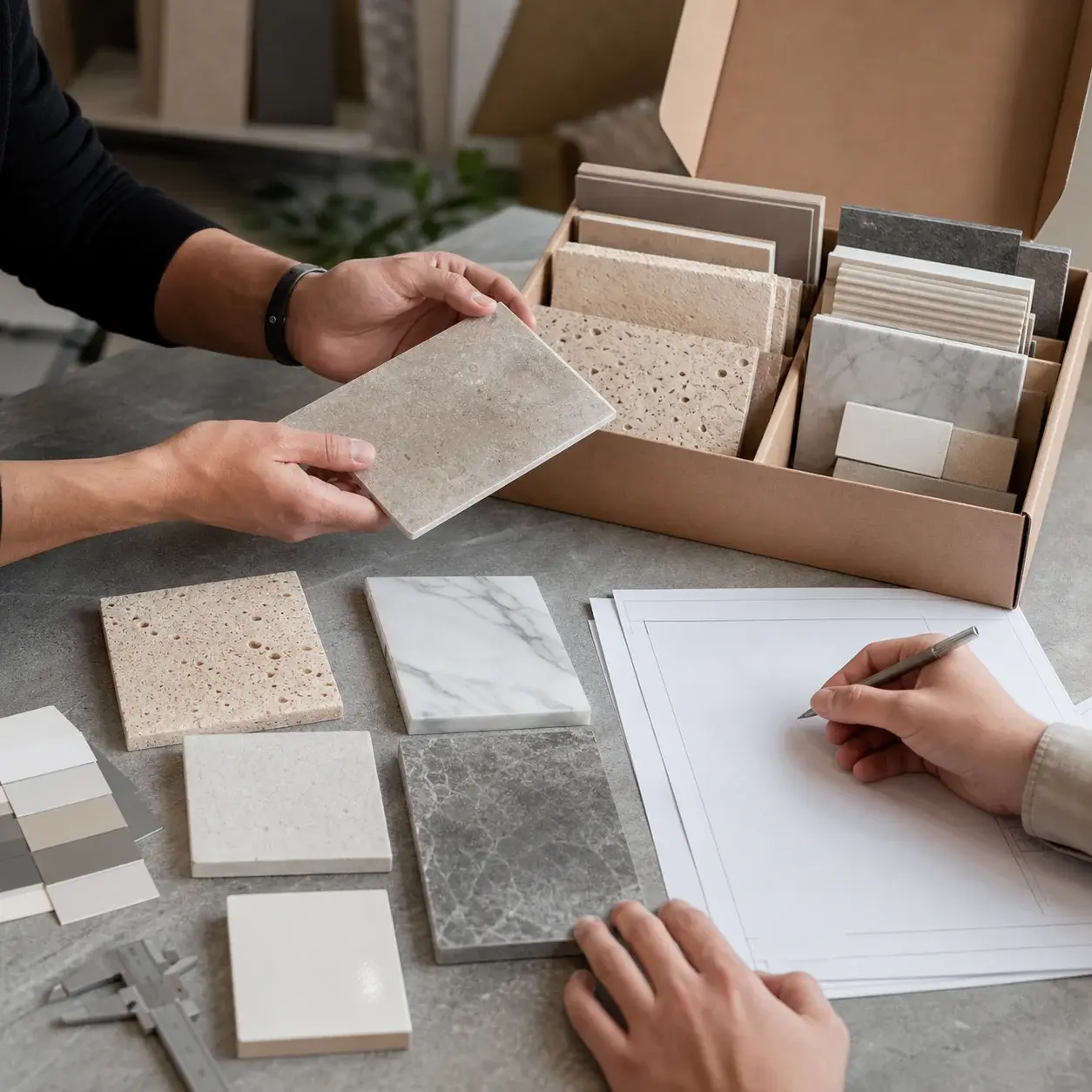
A sample is useful only when tied to a clear sourcing question. Small chips, full tiles, stone ranges, finish boards and technical specimens prove different things. Identify the sample, document its limits and define how the final lot will be checked against it.
On this page
1. Start with the decision the sample must support
Send the application, material or design direction, dimensions, thickness, finish, quantity, destination and project stage. State whether you are screening options, approving appearance, testing installation, preparing a mock-up or confirming technical performance.
This determines the right sample. A small chip is efficient for initial color and texture review; a full tile shows scale, print, gloss and edge; several stone pieces or slab photos show natural range; a mock-up tests assembly and installation. A technical test specimen may follow a laboratory’s required dimensions.
- Project and intended application
- Decision to be made from the sample
- Required sample size and quantity
- Finish, edge, thickness and reference color
- Deadline and delivery destination
2. Give every sample a traceable identity
Label each sample with supplier, product or quarry name, code, size, thickness, finish, date and production or shade reference where applicable. The same identity should appear on the sample list, photographs and courier documents.
Photograph samples in controlled neutral light before dispatch and again on receipt. For natural stone, identify whether the sample shows an average, lighter, darker or distinctive part of the proposed range. For printed tiles, record the number of faces represented.
3. Ship and evaluate without creating false certainty
Use separated, edge-protected packing suited to the weight and fragility. Confirm courier restrictions, declared description and value, destination tax or sample-import requirements and who pays charges. A “free sample” can still create freight, tax or clearance costs.
Evaluate under the project’s lighting and viewing distance. Record color, pattern, texture, gloss, edge, thickness and compatibility with adjacent materials. Do not infer full-lot consistency, slip resistance, strength, water absorption or weather durability from appearance alone; request the relevant evidence or test.
- Condition on arrival and package photos
- Lighting and observation conditions
- Measured dimensions and thickness
- Visual approval and variation notes
- Separate technical tests or documents required
4. Convert approval into order control
Issue a written approval that states the sample IDs, approved characteristics, reservations and permitted variation. Keep one protected control sample with the buyer and, when practical, one matching reference with the supplier or inspector.
The purchase order and inspection plan should cite the approved reference. Before shipment, compare the proposed production lot using appropriate evidence: shade and caliber data for tile, current production photos, representative cartons, stone slab or bundle images, dry layout or inspection. If production source or batch changes, obtain renewed approval where the difference could matter.
Guide FAQ
Questions this guide answers
Are samples free?
Sample material may be free, discounted or charged depending on product and size. Courier, customs, taxes, special packing and full-size pieces may still be payable; confirm the full cost first.
How many stone samples should I request?
Enough to show the decision-relevant range. For early screening, a small set may work; for visual approval, combine samples with current slab or bundle evidence because one piece cannot show natural variation.
Can I use a sample as a technical certificate?
No. A physical sample is not a test report. Technical acceptance requires traceable manufacturer data or competent laboratory results for the relevant product and method.
What if the delivered goods differ from the sample?
Compare them against the written approval and permitted range, document the lot and variance, isolate affected goods, and follow the agreed claim and corrective-action process before installation or resale.
Search terms for this topic
Phrases buyers use when looking for these products.
- tile samples
- stone samples
- sample approval