
HS classification
HS Codes for Stone, Porcelain and Ceramic Tiles
Identify the product facts that control customs classification and confirm the final national tariff line before shipment.
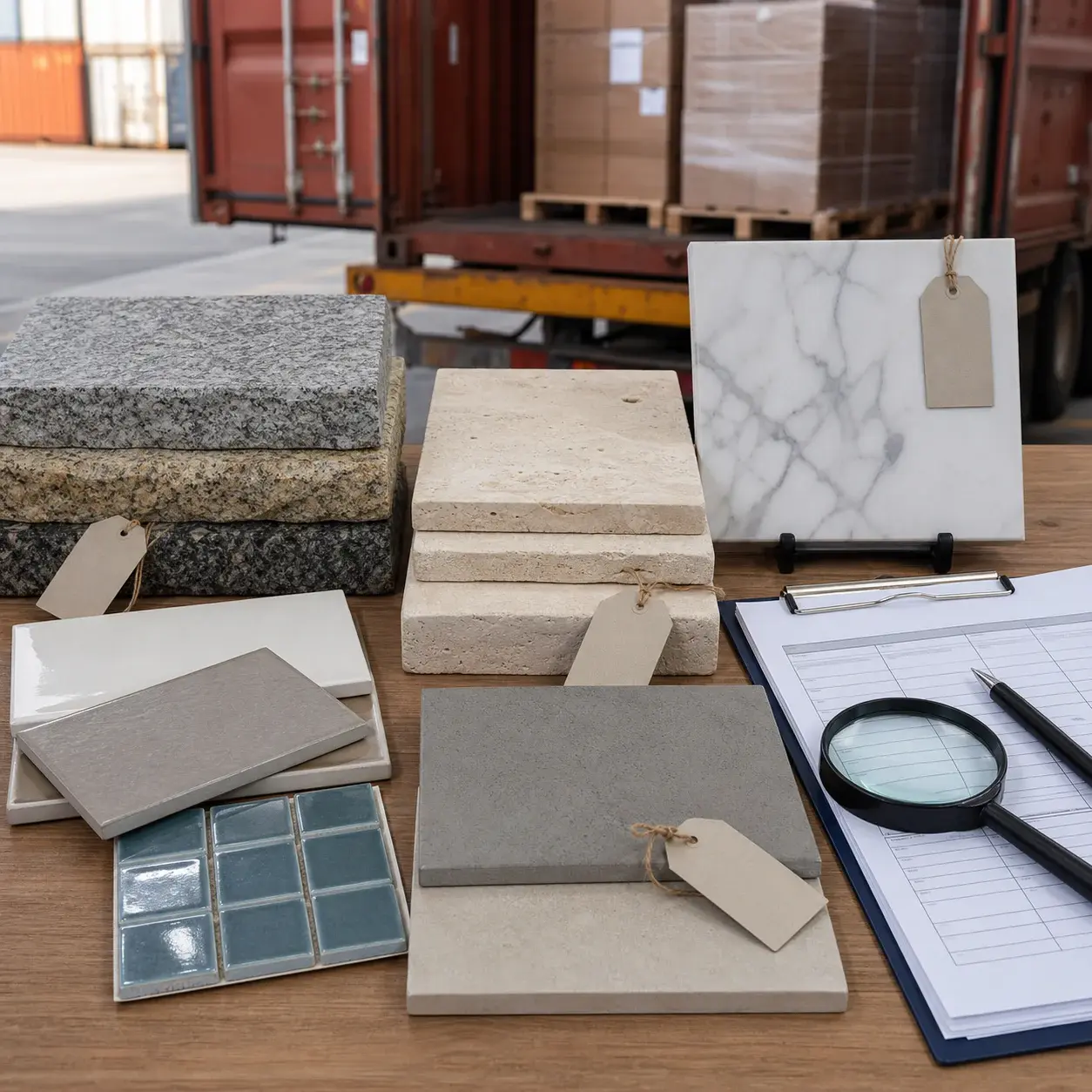
An HS code is a legal classification, not a marketing label. Worked natural stone such as polished marble, travertine and granite is generally classified under heading 6802, rough or merely sawn blocks and slabs under Chapter 25, and porcelain and ceramic tiles under heading 6907 by water absorption. The final national tariff line still depends on material, processing, form, dimensions and destination rules.
On this page
1. Classify the product that will cross the border
Begin with the goods in their imported condition, not the raw material or intended finished project. Record the actual composition, whether the product is natural stone or fired ceramic, the manufacturing or finishing process, form, dimensions, thickness, surface, edge and packaging unit.
For stone, the distinction between blocks, slabs, worked building stone and other articles can matter. For ceramic products, body and water-absorption classification, glaze status, dimensions and intended description may be relevant. Do not use a competitor’s invoice code without confirming that the products are legally comparable.
- Material or ceramic body
- Imported form and degree of working
- Dimensions and thickness
- Surface, glaze, edge and other processing
- Technical data, photographs and sample identity
2. Common HS codes for stone, porcelain and ceramic tiles
The six-digit subheadings below are the ones most often discussed for the products Minux supplies, based on the HS 2022 nomenclature. They are a starting point for your broker, not a ruling: the final line depends on the goods as imported and on the destination tariff.
For natural stone, the degree of working decides the chapter. Blocks and slabs that are only roughly trimmed or merely sawn into rectangular shapes generally stay in Chapter 25 (2515 for marble and travertine, 2516 for granite). Polished, honed or otherwise further-worked slabs and cut-to-size tiles move to heading 6802. Agglomerated or engineered stone is a different product and is generally classified under heading 6810.
For porcelain and ceramic tiles, heading 6907 splits by water absorption measured by weight. Porcelain tiles that meet the 0.5% threshold are typically declared under 6907.21, while most glazed ceramic wall tiles absorb more water and fall under 6907.22 or 6907.23 depending on the tested value. Use the test report, not the product name, to decide.
- 6802.91 – marble, travertine and alabaster, polished or otherwise worked (slabs, tiles, cut-to-size)
- 6802.92 – other calcareous stone, worked
- 6802.93 – granite, polished or otherwise worked
- 6802.99 – other natural stone (for example quartzite), worked
- 6802.21 / 6802.23 / 6802.29 – marble and travertine, granite, or other stone, simply cut or sawn with a flat surface
- 2515.12 / 2516.12 – marble and travertine, or granite, merely cut into rectangular blocks or slabs
- 6907.21 – ceramic tiles with water absorption of 0.5% or less (typical for porcelain tiles and slabs)
- 6907.22 – ceramic tiles with water absorption above 0.5% and up to 10%
- 6907.23 – ceramic tiles with water absorption above 10% (typical for many glazed wall tiles)
- 6907.30 / 6907.40 – ceramic mosaic cubes / finishing ceramics such as trims
3. Move from HS structure to the national tariff
The World Customs Organization maintains the Harmonized System at the international level. The first six digits are harmonized among participating administrations, while countries can add further digits and measures in their national tariff schedules.
A code used for export from Iran may therefore be incomplete or not identical to the tariff line required for import clearance. The importer should check the current destination schedule, legal notes, explanatory material, duty, tax, trade remedies, licensing and statistical requirements.
4. Build a defensible classification file
Give the customs broker a precise product description, technical sheet, material composition, manufacturing process, dimensions, photographs and commercial sample where useful. Include the proposed code only as a working position until it is confirmed.
Keep the broker’s advice or binding ruling where available, the evidence reviewed, date and product scope. If the material, format or process changes, reassess the classification. One code should not be applied across every stone or tile simply because the products appear on the same catalog page.
- Product description written for customs
- Technical sheet and composition
- Manufacturing and finishing process
- Clear images and dimensional information
- Broker opinion or authority ruling and date
5. Keep code, description and documents aligned
The confirmed classification should align with the commercial invoice description, packing list, origin evidence, permits and any conformity documents. Alignment does not mean copying a vague phrase everywhere; each document should serve its purpose while describing the same product facts.
Do not understate value, change descriptions or select a code solely to reduce duty. Incorrect classification can lead to delays, reassessment, penalties or seizure under destination law. The importer remains responsible for the customs declaration, with the licensed broker or authority confirming the final line.
Guide FAQ
Questions this guide answers
Can Minux give me the final HS code?
Minux can supply a precise product description and a proposed classification basis. The importer’s licensed broker or customs authority should confirm the final destination tariff line.
Is porcelain classified the same as natural stone?
No. Porcelain is a ceramic product, while natural stone articles are classified under different HS structures. The exact heading depends on the actual goods and processing.
Why can the code have more than six digits?
The international HS harmonizes the first six digits. Importing countries commonly add digits for national tariff, tax, statistical or control purposes.
Should the code be confirmed before sampling or before shipment?
Start during quotation so duty and requirements can be estimated, then confirm before the order and again if the product or destination rules change. Do not wait until cargo arrives.
What is the HS code for porcelain tiles?
Porcelain tiles and slabs with water absorption of 0.5% or less are generally classified under HS 6907.21. Countries extend this to a longer national code (for example a 10-digit line in the EAEU tariff), so confirm the full line with your broker using the product's test report.
What is the HS code for polished marble or travertine slabs?
Polished or otherwise worked marble and travertine slabs and tiles are generally classified under HS 6802.91. Blocks or slabs merely sawn into rectangular shapes usually fall under 2515.12 instead, so state the processing clearly on the invoice.
What is the HS code for granite slabs?
Polished or otherwise worked granite is generally classified under HS 6802.93, while granite merely cut into rectangular blocks or slabs usually falls under 2516.12.
Search terms for this topic
Phrases buyers use when looking for these products.
- HS code porcelain tiles
- HS code marble slabs
- HS code natural stone