
Porcelain vs ceramic
Porcelain vs Ceramic Tiles
Choose by verified classification, intended use, finish and project performance rather than by appearance or a product name alone.
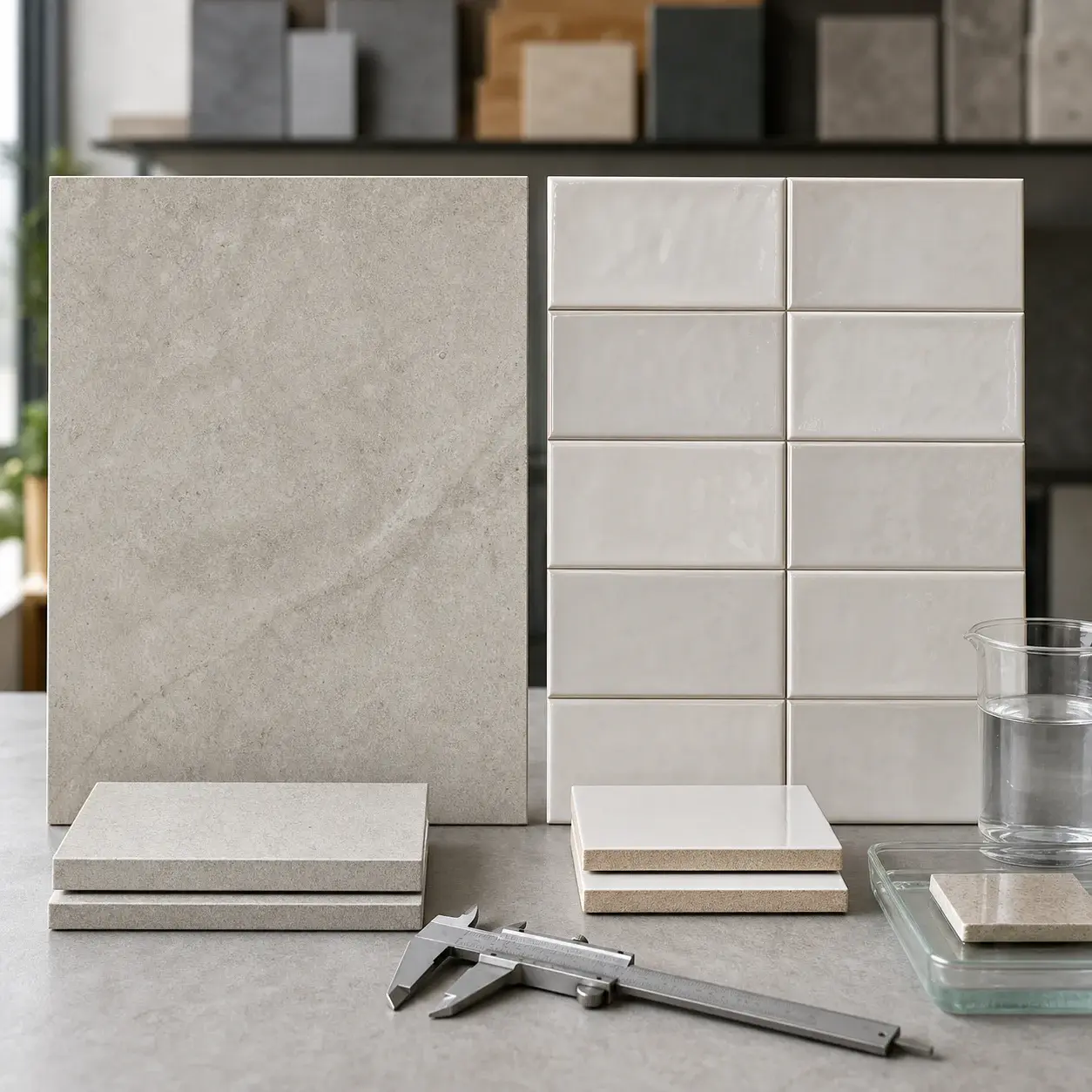
Porcelain and ceramic tiles can look similar while differing in body, water absorption classification, size range, manufacturing control and intended use. The correct choice is the product whose declared properties and evidence fit the project.
On this page
1. Start with the declared classification
Porcelain is part of the wider ceramic-tile family, not an unrelated material. Classification depends on the manufactured body and measured properties, including water absorption under the applicable standard. ISO 10545-3 describes a test method for water absorption, while ISO 13006 provides classification and characteristics for ceramic tiles.
Do not classify a tile from color, weight, glaze or marketing language alone. Ask for the exact series technical data, the declared product group and relevant test report. Verify that the specimen, production series, date and method are traceable to the goods being offered.
- Exact product and manufacturer series
- Declared ceramic-tile group or classification
- Water-absorption result and test method
- Tile dimensions, thickness and edge type
- Traceability of the report to the proposed product
2. Select for the application, not the label
Low water absorption can be important, but it does not answer every design question. The project may also need evidence for breaking strength, abrasion, stain or chemical resistance, slip behavior, frost exposure, dimensional quality or thermal movement. Required performance depends on whether the tile is for a wall, light-use interior floor, commercial floor, wet area, exterior or façade system.
A ceramic wall tile can be the efficient and appropriate choice for a dry interior wall. A porcelain product may be preferred for demanding floor or exterior conditions when its declared performance, finish and installation system meet the project requirements. The designer or specifier should make the final suitability decision.
3. Compare finish, dimensions and installation impact
Surface finish changes maintenance and safety: polished, matt, textured and structured products behave differently. Large formats increase the importance of substrate flatness, handling, adhesive coverage, movement joints and installer capability. Rectified edges allow tighter visual alignment but do not eliminate the need for joints or dimensional checks.
Compare actual work size, thickness, warpage or flatness information, shade and caliber, number of print faces and recommended installation method. Obtain full-size samples when scale, gloss or pattern repetition matters; a small chip can hide important visual and handling differences.
- Surface, gloss, texture and cleaning expectation
- Work size, thickness and dimensional tolerance
- Shade, caliber and number of graphic faces
- Substrate and installation requirements
- Handling and replacement plan for large formats
4. Write a purchase specification that can be inspected
The order should name the series, classification, size, thickness, edge, finish, shade or caliber controls, quantity, carton and pallet data, technical documents and sample reference. State which characteristics will be inspected before shipment and how nonconforming cartons or tiles will be handled.
Compare prices on the same quantity basis and include packing, wastage allowance, installation implications, transport weight and replacement availability. A lower unit price can be offset by more breakage, unsuitable performance or costly installation.
Guide FAQ
Questions this guide answers
Is porcelain always better than ceramic?
No. Porcelain is not automatically the best value for every application. Select the product whose verified properties, surface, dimensions, installation requirements and cost fit the project.
Can water absorption be judged from a tile sample at home?
No reliable classification should be made from an informal soak test. Use the manufacturer’s traceable data or a competent laboratory result based on an accepted test method.
Can ceramic wall tile be used on a floor?
Only if the exact product is declared and evidenced for that floor application. Many wall-tile products are not designed for floor loads, wear or slip requirements.
What should be inspected before shipment?
Verify product identity, dimensions, thickness, surface, shade and caliber references, print mix, visible defects, carton data, quantities, pallet condition and the agreed technical documents.
Search terms for this topic
Phrases buyers use when looking for these products.
- porcelain tiles
- ceramic wall tiles
- large-format porcelain