
Travertine comparison
Iranian Travertine vs Turkish Travertine
A source-neutral comparison framework for color range, cut, filling, performance evidence, supply consistency, packing and landed cost.
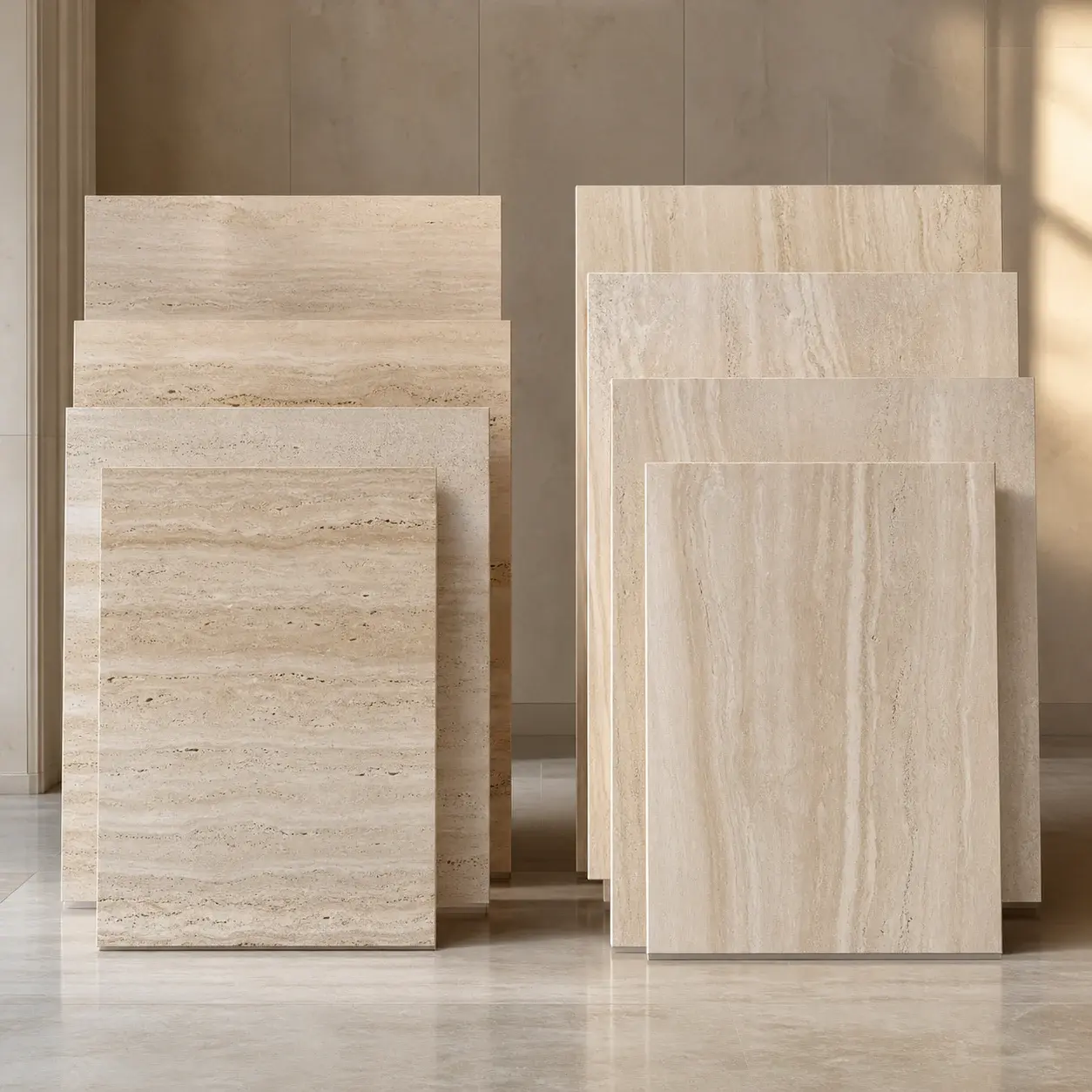
Country of origin is not a quality grade. Quarry layer, block selection, vein direction, finish, filling, repair, calibration and production control can matter more than the passport of the stone. Compare actual lots against the same written specification.
On this page
1. Compare the quarry and selection, not stereotypes
Iran and Türkiye both supply travertine in multiple colors, structures and commercial selections. A broad statement that one origin is always denser, cleaner or more consistent is unreliable. Ask for the quarry or production source when traceability matters and define the approved visual range.
Use comparable evidence: samples from the proposed selection, current slab or bundle photographs, the same lighting and wet/dry condition, and a stated percentage or rule for out-of-range pieces. If continuous supply is important, discuss whether future orders can come from the same quarry layer or a controlled replacement range.
- Named material and source when available
- Vein-cut or cross-cut orientation
- Color, banding, pores and fossil structure
- Commercial selection and rejection boundaries
- Availability for repeat phases
2. Normalize cut, finish, filling and repair
Vein-cut travertine emphasizes linear bedding; cross-cut exposes clouded or circular movement. The same stone can look substantially different by cut. Compare honed, polished, brushed or other finishes on equivalent samples because gloss and texture change perceived color.
Specify filled or unfilled, the filler type and color, mesh or resin treatment, edge work, calibration and acceptable repair. For exterior or mechanically fixed use, the designer should evaluate project-specific performance and anchoring requirements rather than infer suitability from origin.
3. Ask for relevant technical evidence
Travertine is naturally porous and variable. Where the project requires performance data, request results relevant to the intended use. Examples include water absorption, apparent density, flexural behavior, abrasion and freeze–thaw exposure. Use an accepted method and samples representative of the proposed material.
Test results are not a universal guarantee for every slab. Check the test date, specimen description, finish and source, and have the project professional decide whether the evidence and safety factors are appropriate for the application.
- Test method and laboratory identity
- Material source and specimen description
- Result units and acceptance requirement
- Relevance to finish and intended application
- Need for project-specific engineering review
4. Compare landed value and execution risk
Normalize the quote by usable dimensions, thickness tolerance, finish, selection range, repair policy, packing, order quantity and inspection. Then add inland transport, origin handling, freight, insurance where applicable, destination charges, duty and expected waste.
A slightly lower FOB price may not be the better buy if the range is unsuitable, packing is weak or replacement supply is uncertain. Make the final choice from approved visual evidence, technical requirements, production capacity, logistics and total landed risk.
Guide FAQ
Questions this guide answers
Is Iranian travertine always cheaper than Turkish travertine?
No. Price depends on the exact quarry selection, dimensions, thickness, finish, processing, order size, packing, route and market conditions. Compare like-for-like offers and total landed cost.
Which origin is better for façades?
Origin alone cannot decide suitability. The designer must assess the specific stone, test evidence, thickness, anchoring system, exposure and applicable project rules.
Can a sample show the full color range?
No. Use a sample as a reference point and review current slabs, bundles or a dry layout when visual variation is commercially important.
What should an inspection record for travertine include?
It should identify the lot and record dimensions, thickness, finish, cut direction, visual range, filling or repair, edge condition, quantities, packing and representative photographs against the agreed criteria.
Search terms for this topic
Phrases buyers use when looking for these products.
- Iranian travertine
- Turkish travertine
- travertine facade stone